
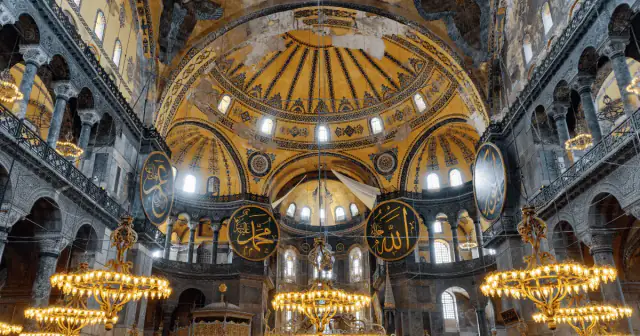
Discover why Hagia Sophia's architecture is considered one of the greatest achievements in history. Learn about its dome, designers, engineering innovations, and lasting influence.
Quick answer
Hagia Sophia's architecture changed history because its vast dome, pendentive system, light effects and open interior influenced Byzantine and Ottoman architecture for centuries.
Why Is Hagia Sophia Architecture So Famous?
When Hagia Sophia was completed in 537 AD, it was unlike anything people had seen before. The enormous dome, open interior and light-filled space made it an engineering miracle.
Nearly 1,500 years later, architects still study how it was built.
Who Built Hagia Sophia?
Hagia Sophia was commissioned by Byzantine Emperor Justinian I. Construction began in 532 AD and was completed in 537 AD.
For a building of this scale, the five-year construction period remains extraordinary.
Who Designed Hagia Sophia?
The main designers were Anthemius of Tralles and Isidore of Miletus, both known for mathematical and scientific knowledge.
Their technical understanding helped create solutions that were revolutionary for the 6th century.
Why Is The Dome So Important?
The dome rises about 55 meters high and spans about 31 meters wide. For many visitors, it appears to float above the interior.
This illusion comes partly from the ring of windows around its base, which allows light to separate the dome visually from the supporting structure.
What Are Pendentives?
Pendentives are curved triangular structures that transfer the weight of a circular dome onto a square base.
They made the vast open interior possible and became one of Hagia Sophia's most important architectural innovations.
Why Did The Original Dome Collapse?
Part of the original dome collapsed after an earthquake in 558 AD. It was rebuilt higher and stronger by Isidore the Younger.
The dome visitors see today reflects centuries of repair, reinforcement and restoration.
How Did Hagia Sophia Influence Mosques?
Hagia Sophia influenced Byzantine architecture and later Ottoman mosque design. The Blue Mosque, Süleymaniye Mosque and other Ottoman monuments respond to its dome-centered spatial idea.
Visiting Hagia Sophia and the Blue Mosque together makes this influence easier to understand.
Why Does Hagia Sophia Feel So Large?
The building uses height, light, perspective and open space to make the interior feel larger than raw measurements alone suggest.
This psychological effect is one reason the first view inside can feel so dramatic.
Local Tips From Istanbul
- Visit early in the morning if this topic matters to your experience.
- Look up often; many of Hagia Sophia's most important details are above eye level.
- Use the Upper Gallery for better context, photos and architectural perspective.
- Book with enough time around prayer periods and Sultanahmet crowds.
FAQ
Who built Hagia Sophia?
Emperor Justinian I commissioned its construction.
Who designed Hagia Sophia?
Anthemius of Tralles and Isidore of Miletus designed it.
When was Hagia Sophia built?
It was built between 532 and 537 AD.
Why is Hagia Sophia architecture important?
It introduced engineering solutions and spatial ideas that influenced architecture worldwide.
What is the most famous feature of Hagia Sophia?
The enormous central dome is the most famous feature.
Final Thoughts
Hagia Sophia is not just one attraction or one historical label. It is a layered landmark where Byzantine, Ottoman, Christian, Islamic and modern Istanbul stories meet under the same dome.
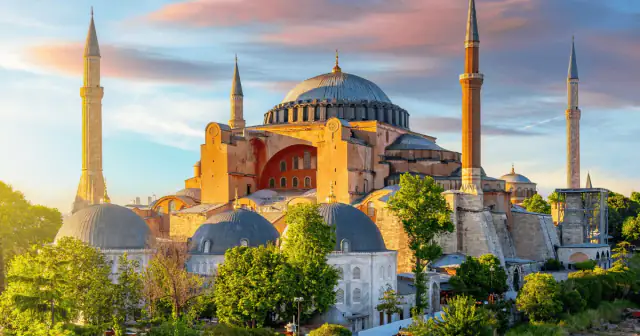
Hagia Sophia Ticket & Visitor Guide
Skip the ticket-office line · AR experience · audio commentary in 23 languages · from €28.00