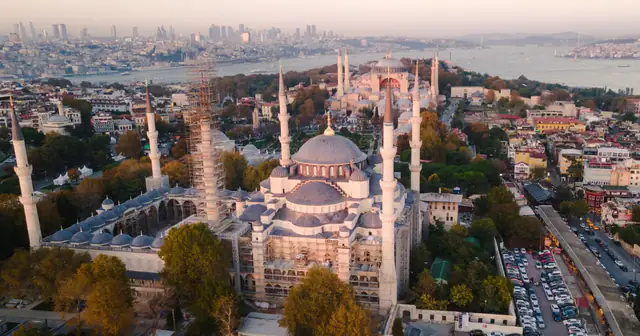
Hagia Sophia was completed in 537 AD under Byzantine Emperor Justinian I. Few buildings in the world represent so many different periods of history in one place.
Quick answer
Hagia Sophia began as a Byzantine cathedral, became an Ottoman mosque after 1453, became a museum in 1935, and functions as a mosque again today.
First Cathedral
For nearly 1,000 years, Hagia Sophia was one of the most important churches in the Christian world. It was also regarded as one of the greatest architectural achievements of its time.
Why 537 AD Matters
The completion date matters because it shows how early Hagia Sophia's engineering achievement was. Visitors often compare it with later European cathedrals, but Hagia Sophia reached its monumental scale centuries earlier.
This is one reason the dome still feels surprising today. It is not just large; it was large at a time when building something like it was extraordinarily difficult.
Ottoman Period
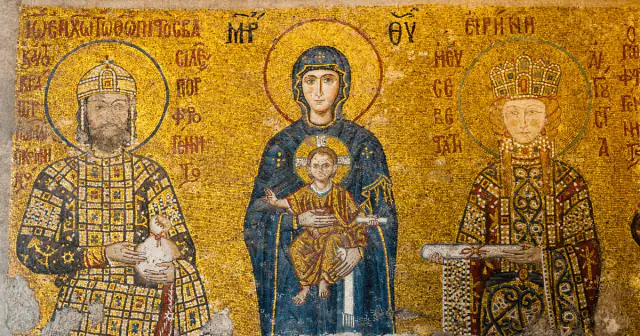
After 1453, Hagia Sophia became a mosque. Minarets were added, Christian mosaics were covered or adapted, and Islamic calligraphy became part of the interior story.
Why The Interior Has Layers
The interior is powerful because different periods remain visible together. Byzantine mosaics, marble surfaces, Ottoman calligraphy, mosque elements and imperial architecture all share the same space.
This layered quality is what separates Hagia Sophia from a normal museum visit. You are not looking at one period of history; you are looking at many periods negotiating the same building.
Museum Period
In 1935, Hagia Sophia became a museum. For decades, visitors experienced it mainly as a cultural and historical monument.
Today
Today, Hagia Sophia functions as a mosque while welcoming millions of visitors. This dual identity is one reason visitor rules can feel different from a normal museum.
What This Means For Your Visit
Visitors should approach Hagia Sophia as both a historic monument and an active religious space. That means planning for tickets and sightseeing, while also respecting prayer times, dress code and quieter behavior inside.
Understanding this before you arrive makes the visit smoother and helps explain why some access rules may feel different from other Istanbul museums.
Why It Matters
Very few buildings combine Byzantine architecture, Ottoman heritage, religious significance and UNESCO-level history under one roof.
Book Your Hagia Sophia Ticket
For a smoother visit, book online before you arrive. On your visit day, use the code you receive to collect the mosque ticket at the Hagia Sophia History & Experience Museum ticket kiosk, then continue to mandatory security screening.
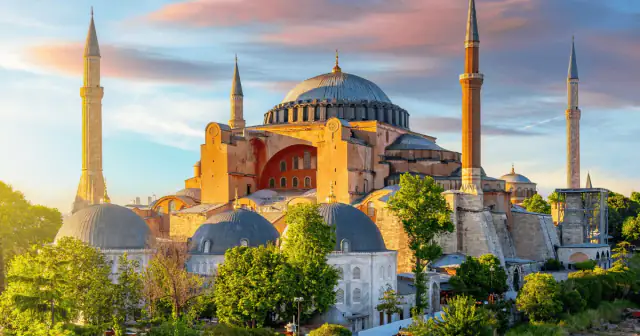
Hagia Sophia Ticket & Visitor Guide
Visit-day code → museum kiosk ticket exchange → mandatory security